Free LASIK Consultation: Call (855) 875-2020 9:00am–5:00pm

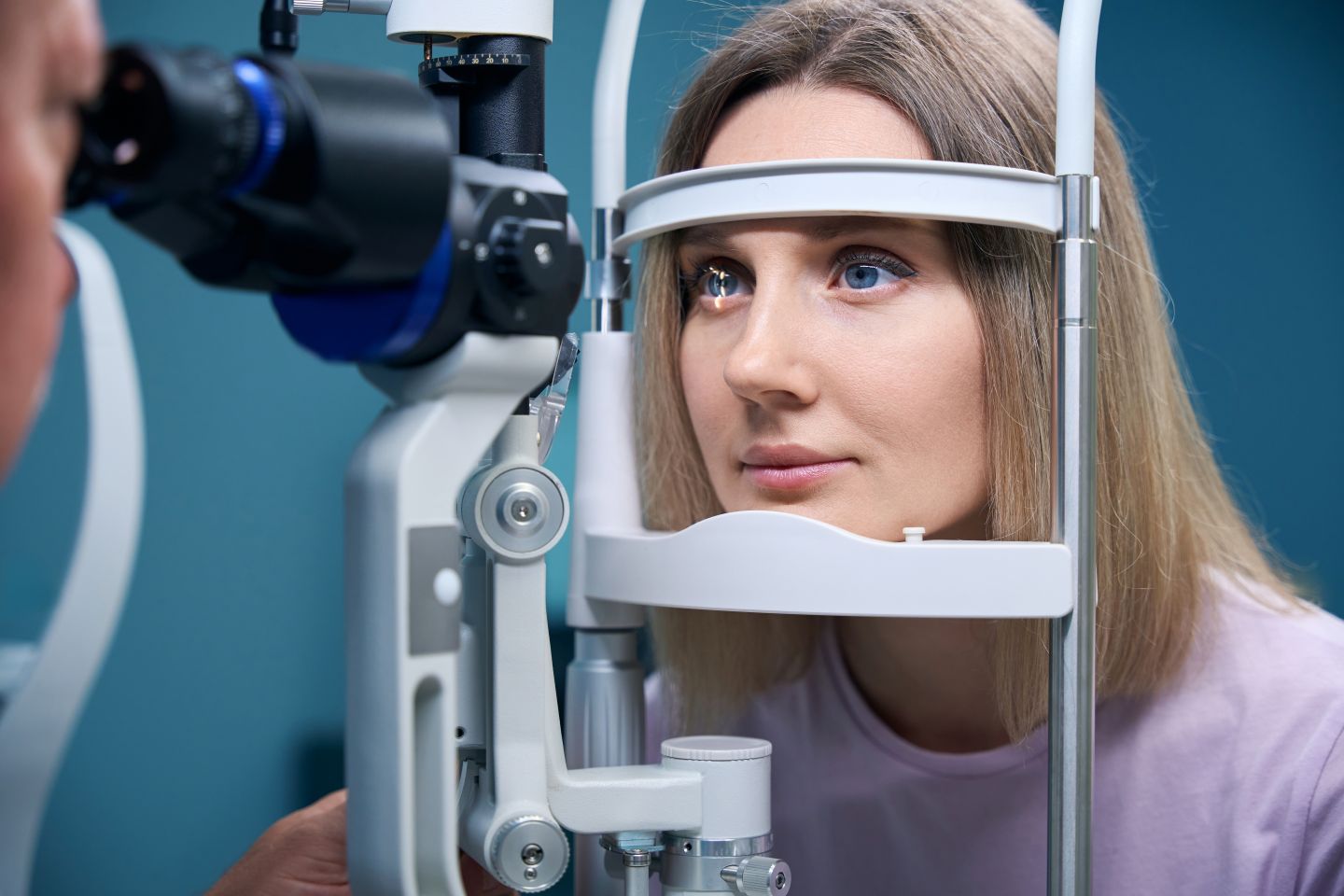
EVO ICL, or Implantable Collamer Lens, is an additive lens procedure that may offer a path to clearer vision for individuals who are not ideal candidates for laser-based correction. Whether you have been told your prescription is too high for LASIK or your corneas are too thin, EVO ICL may be worth exploring. Our doctors cover candidacy requirements, how the procedure works, what results may look like, and what to expect from a consultation with an experienced ophthalmologist.
EVO ICL is a posterior chamber phakic intraocular lens, meaning it is implanted inside the eye in front of the natural lens without removing any corneal tissue. It is FDA-approved for the correction of myopia ranging from -3.0 D to -20.0 D and for myopia with astigmatism, making it a meaningful option for patients with moderate to severe nearsightedness.
The lens itself is made from Collamer, a biocompatible material derived in part from collagen. This material is designed to work harmoniously with the eye’s natural biology and includes a built-in UV filter. Because no corneal tissue is altered, the procedure is often described as additive rather than subtractive.
The implantation is typically performed on an outpatient basis. A small incision is made, and the folded lens is inserted through it, unfolding into position behind the iris. The procedure generally takes under 30 minutes, and most patients report that it is well-tolerated. At Kung Eye Center, patients receive individualized pre-operative evaluation using advanced diagnostic imaging to confirm proper sizing and placement, a step that reflects the same commitment to precision that guides all surgical care here.
Understanding candidacy is central to any complete guide to EVO ICL for vision correction. Not every patient is a suitable candidate, and a thorough evaluation is the only way to determine whether this procedure aligns with your eye health and prescription needs.
Ideal candidates are typically between 21 and 45 years of age and have a stable prescription for at least 1 year. Patients with moderate to severe myopia who have been told they do not qualify for LASIK due to thin corneas or high prescriptions are often among those who may benefit most from EVO ICL. Sufficient anterior chamber depth is also required to safely accommodate the implant.
Certain conditions may make a patient ineligible or require further discussion with a surgeon. These can include uncontrolled glaucoma, a history of iritis or uveitis, inadequate endothelial cell count, or a particularly shallow anterior chamber. Patients managing conditions such as glaucoma or keratoconus would need individualized assessment before any refractive procedure is considered.
Because candidacy involves so many interrelated variables, our practice offers complimentary consultations to assess each patient’s unique anatomy and history. In our practice, we find that patients who arrive with questions and realistic expectations tend to have the most satisfying experiences, regardless of which procedure ultimately proves to be the right fit.
Any honest, complete guide to EVO ICL for vision correction must address results with both clarity and appropriate context. Clinical studies supporting the FDA approval of EVO ICL have reported high rates of patient satisfaction and meaningful improvements in uncorrected visual acuity. Many patients report being able to see clearly at a distance without glasses or contacts following the procedure.
One quality that patients frequently highlight is the visual clarity associated with EVO ICL. Because the Collamer lens is placed inside the eye rather than on the ocular surface, some patients describe a particularly natural quality to their vision. Most patients experience minimal downtime, with many returning to normal activities within a day or two, though individual recovery timelines vary.
Unlike laser procedures that permanently reshape corneal tissue, EVO ICL can be removed or replaced by a qualified surgeon if a patient’s vision needs change over time. This is an important consideration for younger patients who may anticipate future changes in their prescription or eventually become candidates for cataract surgery. Our team is experienced in discussing long-term vision planning, including how refractive procedures relate to future considerations for cataract surgery.
Patients seeking a complete guide to EVO ICL for vision correction deserve a surgeon who brings both technical depth and genuine care to every consultation. Dr. Kung is certified by the American Board of Ophthalmology and the National Board of Medical Examiners, and is a member of the American Society of Cataract and Refractive Surgery and the International Society for Refractive Surgery, among other distinguished organizations. He has been recognized as a Castle Connolly Top Doctor and a New York Times SuperDoctor.
What sets Kung Eye Center apart is not credentials alone. Dr. Kung has played a key role in the development of laser eye correction and has invented surgical instruments that have been widely adopted in the field. Fellow ophthalmologists seek him out to observe his techniques firsthand. Yet patients who walk through our doors in Staten Island and the surrounding area consistently describe feeling known, heard, and genuinely cared for.
The procedure is performed with topical anesthetic eye drops, and most patients report it is well tolerated with minimal discomfort. Some patients describe mild pressure during the procedure, and mild irritation or light sensitivity in the hours following is not uncommon. These sensations typically resolve within a day or two.
EVO ICL is designed to remain in place indefinitely, though it can be removed or exchanged by a qualified surgeon if needed. Many patients consider it a long-term vision correction solution. If your prescription changes significantly over time or if you later develop cataracts, your ophthalmologist can discuss adjustment options at
Many patients experience a significant reduction in their dependence on glasses or contact lenses after EVO ICL. However, results vary from person to person, and some individuals may still prefer glasses for certain activities such as reading or nighttime driving. As patients age, normal changes in the eye associated with presbyopia may still occur, affecting near vision regardless of prior refractive procedures.
If you are exploring alternatives to LASIK or searching for a long-term vision correction option, EVO ICL may be worth considering. At Kung Eye Center, our team combines advanced diagnostics, extensive surgical experience, and individualized care to help patients make informed decisions about their vision. Every consultation is centered on understanding your goals, thoroughly evaluating your candidacy, and recommending the approach that best supports your eye health and lifestyle. Contact our office to schedule your complimentary consultation and learn whether EVO ICL may be right for you.
Please call our New York office at (929) 429-2928 or our New Jersey office at (732) 724-2535 with any questions you may have.
STATEN ISLAND, NY EAST BRUNSWICK, NJ


