Free LASIK Consultation: Call (855) 875-2020 9:00am–5:00pm
Free LASIK Consultation: Call (855) 875-2020 9:00am–5:00pm


If you live near New Jersey or Staten Island, Kung Eye Center is here to treat your keratoconus using the latest corneal topography treatment options, such as collagen cross-linking.
Keratoconus (ker-uh-toe-KOH-nus) is a progressive eye disease that affects the cornea, the clear tissue on the front surface of your eye. It causes the cornea to thin and gradually bulge outward into a cone-like shape. The condition often develops during adolescence or early adulthood and can cause blurred vision, irregular corneal astigmatism, and light sensitivity.
As keratoconus progresses, these vision problems may become harder to correct with standard glasses. An eye doctor may recommend specialty contact lenses, including scleral contact lenses, to improve visual clarity. Keratoconus patients who wear contact lenses for keratoconus need ongoing monitoring to ensure an appropriate fit as their corneas change.
Common signs and symptoms of keratoconus include:
Without appropriate care, advanced keratoconus can lead to significant vision loss. Regular comprehensive eye exams support early diagnosis, allowing providers to evaluate changes and discuss modern treatments, such as corneal cross-linking to help slow or stop progression in many patients and optimize long-term vision. With appropriate treatment and monitoring, most patients can maintain useful, stable vision.
Kung Eye diagnoses and treats keratoconus at both of its offices in Staten Island, NY, and East Brunswick, NJ.
Gain a deeper understanding about the topics, conditions, and procedures discussed on this page by watching our informational videos.
While the cause of keratoconus is not known, both genetic and environmental factors are thought to play a part in its development. The following risk factors may increase the chances for patients with keratoconus:
The treatment for keratoconus will depend on the severity of your condition (if it’s in early stages or more developed) and how quickly it is progressing. With early keratoconus, we can improve vision with glasses and a soft contact lens, but with severe keratoconus, hard scleral lenses will become required in order to see somewhat clearly. If the condition keeps progressing and you see corneal scarring with advanced keratoconus, surgical corneal transplants may be required. Depending on the severity of your condition and corneal shape, surgical options may include:
Corneal collagen cross-linking may also be an option for a diseased cornea. During this treatment, riboflavin eye drops are placed on the cornea and treated with ultraviolet light. The corneal cross-linking causes a stiffening of the cornea, preventing further shape changes and ultimately reducing the risk of progressive vision loss.
Approximately 1 in 300 people living in the US develop keratoconus. The disease usually occurs in both eyes and typically develops between the ages of 10-25. The condition can continue to progress but usually slows or stops as a patient ages.
Early detection of keratoconus is key as new treatment options, such as collagen cross-linking (CXL), can be performed to slow or even stop the progression of keratoconus entirely. If you’re looking for keratoconus treatment in Central New Jersey or Staten Island, look no further than the Kung Eye Center. Contact us today to schedule your appointment.
Please call our New York office at (929) 429-2928 or our New Jersey office at (732) 724-2535 with any questions you may have.
STATEN ISLAND, NY EAST BRUNSWICK, NJ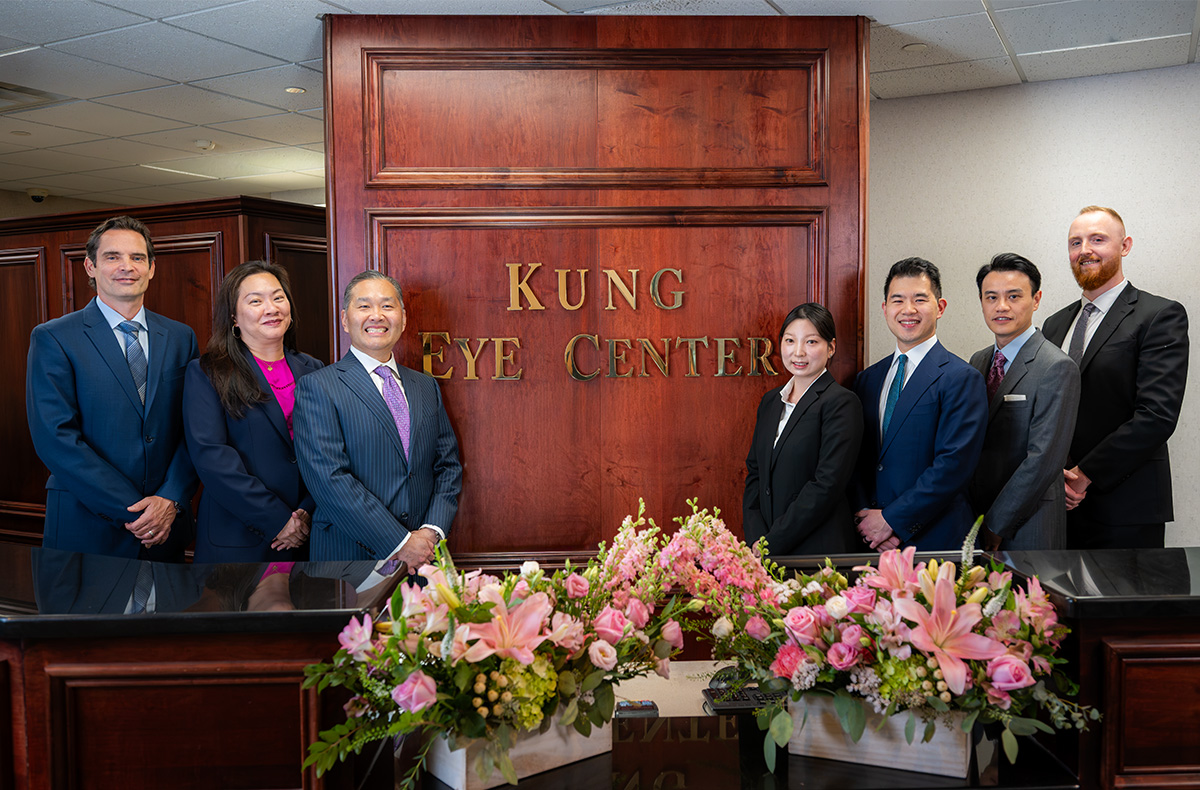
 Introduction Videos
Dr. Kung’s mastery in ophthalmology means you will receive thoroughly informed recommendations for vision correction and maintenance, and that your treatment will be expertly performed for the best possible results.
MEET THE DOCTORS