Free LASIK Consultation: Call (855) 875-2020 9:00am–5:00pm

Understanding the differences between LASIK and PRK is one of the most important steps a patient in Staten Island or East Brunswick can take before pursuing laser vision correction. Both procedures use excimer laser technology to reshape the cornea and reduce dependence on glasses or contact lenses, yet they differ in technique, recovery, and candidacy in ways that matter significantly to your outcome. At Kung Eye Center, Dr. Kung has played a direct role in the development of laser eye correction and has invented instruments widely used in the field, giving our patients access to insight that goes far beyond a standard consultation. This guide answers the questions we hear most often, so you can arrive at your appointment informed and confident.
Schedule your complimentary consultation at Kung Eye Center today.
The differences between LASIK and PRK begin with how each procedure accesses the cornea. In LASIK, a thin corneal flap is created, lifted to expose the tissue beneath, and then repositioned after laser reshaping. In PRK, the outer epithelial layer is gently removed rather than cut into a flap, and the laser is applied directly to the corneal surface. Both methods ultimately reshape the same underlying tissue to correct refractive errors such as nearsightedness, farsightedness, and astigmatism. The approach your surgeon recommends will depend on your individual corneal anatomy and lifestyle factors.
With LASIK, your surgeon creates a precise flap using either a microkeratome or, in bladeless LASIK, a femtosecond laser. The flap is lifted, an excimer laser reshapes the corneal stroma, and the flap is laid back into place, sealing without sutures. With PRK, the epithelium is loosened and removed, the excimer laser reshapes the surface, and a bandage contact lens is placed over the eye while the epithelium regenerates over several days. Both steps take only minutes per eye once you are positioned at the laser.
Both procedures may help reduce or eliminate dependence on corrective lenses for myopia (nearsightedness), hyperopia (farsightedness), and astigmatism. The degree of correction achievable depends on your prescription and the amount of healthy corneal tissue available. Patients with very high prescriptions or thin corneas may find that one procedure offers a better safety margin than the other. A thorough corneal mapping and refraction measurement at Kung Eye Center will clarify which option, or whether an alternative such as refractive lens exchange, is most appropriate for your vision goals.
Good LASIK candidates generally have adequate corneal thickness to allow safe flap creation, a stable prescription for at least one to two years, and no active corneal conditions such as keratoconus. Patients who play contact sports or work in physically demanding environments sometimes reconsider LASIK because the flap, while secure in daily life, can be a factor in high-impact situations. Our LASIK self-test is a helpful first step, though a comprehensive in-office evaluation provides the definitive answer. Individual results may vary based on your unique anatomy.
PRK is often recommended for patients with thinner corneas, drier eyes, or occupations and hobbies that involve regular physical contact where a flap could pose a concern. Because no flap is created, there is no risk of flap-related complications. Patients with early signs of keratoconus or irregular corneal curvature may also be directed toward PRK or an alternative procedure entirely. The LASIK vs PRK differences in candidacy are highly individual, which is why Dr. Kung reviews each patient’s corneal topography, tear film quality, and full ocular history before making any recommendation.
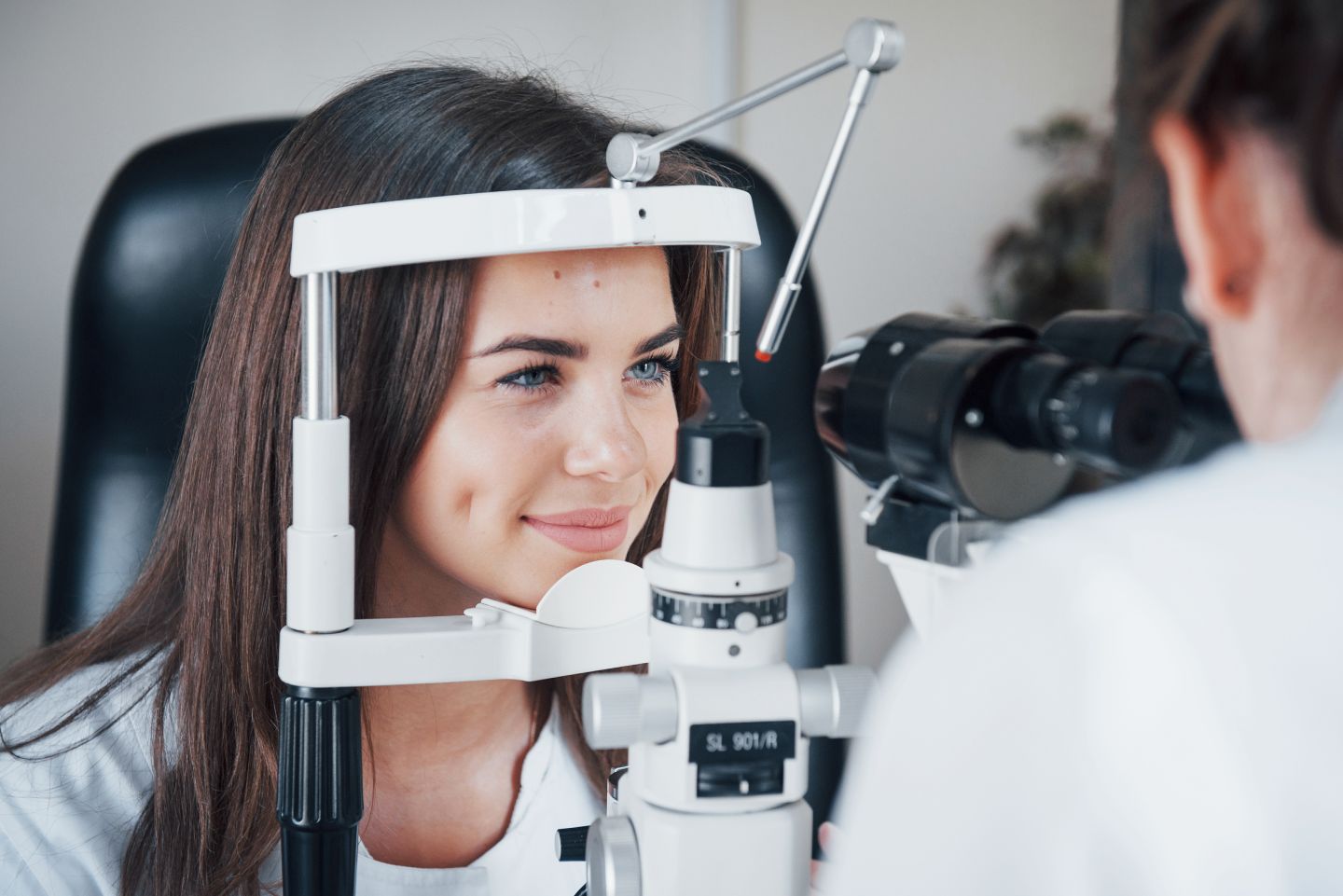
Your consultation at Kung Eye Center begins with a comprehensive evaluation that includes corneal topography, pachymetry to measure corneal thickness, a full refraction, and a tear film assessment. Dr. Kung reviews the data personally and discusses which procedure aligns best with your prescription, anatomy, and lifestyle. You will have ample time to ask questions and will never feel rushed. Complimentary consultations are offered so that cost is never a barrier to getting the information you need. You can find our locations and directions through the Kung Eye Center locations page.
The laser component of both LASIK and PRK typically takes under a minute per eye, though total chair time including preparation, positioning, and post-procedure checks is usually 15 to 30 minutes for both eyes combined. PRK does not add meaningfully to in-suite time compared to LASIK. The difference between the two procedures shows up not in surgical duration but in the days and weeks that follow, particularly in the speed of visual recovery and the comfort level during healing.
Recovery is one of the most clinically significant differences between LASIK and PRK. LASIK patients often notice improved vision within 24 hours, with most returning to normal activities within a day or two. Downtime for most patients is minimal. PRK recovery takes longer because the epithelium must regenerate: mild to moderate discomfort and blurred vision during the first week are common, and full visual clarity may take several weeks to a few months as the cornea stabilizes. Both procedures require post-operative drops and follow-up visits. Individual results may vary, and Dr. Kung provides detailed aftercare guidance for each patient.
Few practices can say that their surgeon contributed directly to the development of the technology being used. Dr. Kung has played a key role in advancing laser eye correction and has invented instruments now used broadly across the field. Fellow ophthalmologists observe his surgical technique to refine their own. Combined with a practice culture that treats every patient as part of the family rather than a number, Kung Eye Center offers something uncommon: world-class surgical credentials delivered with genuine personal care. You can learn more about our approach on the Our Approach to Eye Care page.
Several variables influence the overall investment in laser vision correction, including the technology platform used, the complexity of your prescription, the number of follow-up visits included, and whether any enhancements are needed. Because each patient’s anatomy and prescription differ, quoting a meaningful number without an evaluation would not serve you well. Kung Eye Center offers complimentary consultations so you can receive a personalized assessment before any financial discussion takes place.
Both LASIK and PRK have established safety records supported by decades of clinical data and regulatory review. As with any surgical procedure, risks exist, and candidacy screening is specifically designed to identify patients for whom the benefit-to-risk profile is favorable. Common temporary effects include dry eye symptoms, halos, and glare, particularly in low-light conditions. Serious complications are uncommon when procedures are performed by an experienced, board-certified ophthalmologist using current technology. Dr. Kung is certified by the American Board of Ophthalmology and is a member of the American Society of Cataract and Refractive Surgery, among other leading professional organizations. Individual results may vary.
Navigating LASIK vs PRK on your own can feel overwhelming, and the stakes are high when it involves your vision. At Kung Eye Center, patients benefit from the guidance of a surgeon who did not simply learn laser vision correction but helped shape it. Dr. Kung is certified by the American Board of Ophthalmology, is a recognized Castle Connolly Top Doctor and New York Times SuperDoctor, and holds memberships in the American Academy of Ophthalmology and the American Society of Cataract and Refractive Surgery, among others. Our team brings that level of expertise to every appointment while making sure you feel known, heard, and genuinely cared for throughout your entire experience.
If you are weighing LASIK vs PRK and want expert guidance from a practice that combines surgical distinction with personal warmth, Kung Eye Center in Staten Island, NY, and East Brunswick is ready to help. Contact us to schedule your complimentary consultation and find out which procedure may be right for you.
Please call our New York office at (929) 429-2928 or our New Jersey office at (732) 724-2535 with any questions you may have.
STATEN ISLAND, NY EAST BRUNSWICK, NJ


